
Wedding album: how to create your story from your wedding photos
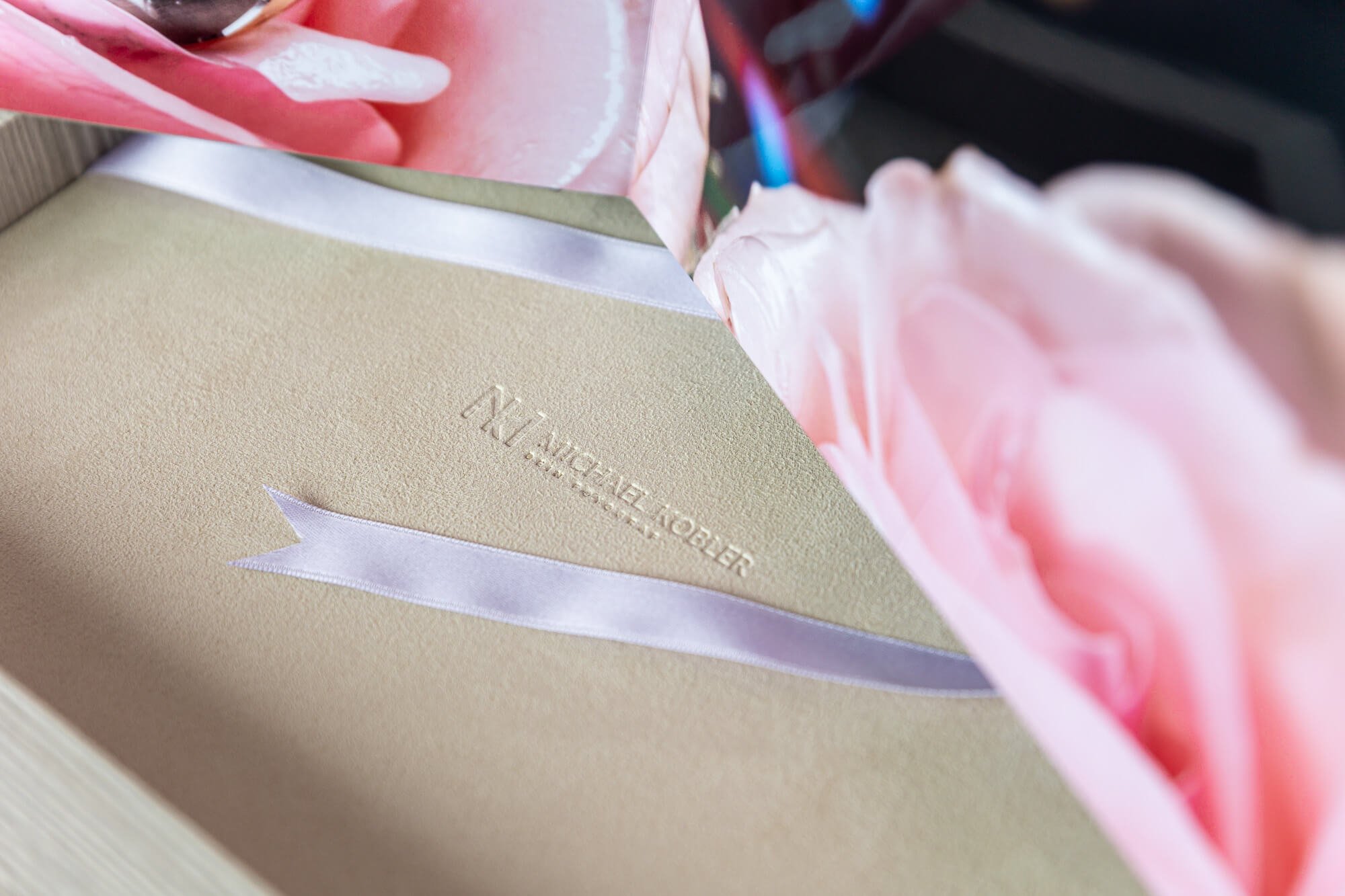
Wedding albums from Italian manufacturers
This is how your picture story is created step by step
After the wedding, you want to relive your special day. Calmly, at your own pace, without a schedule and without the hustle and bustle. That's exactly what your photos are for. And to turn them into a wedding album, you need a sequence of images that makes sense, feels right, and guides you through the day as you leaf through the pages.
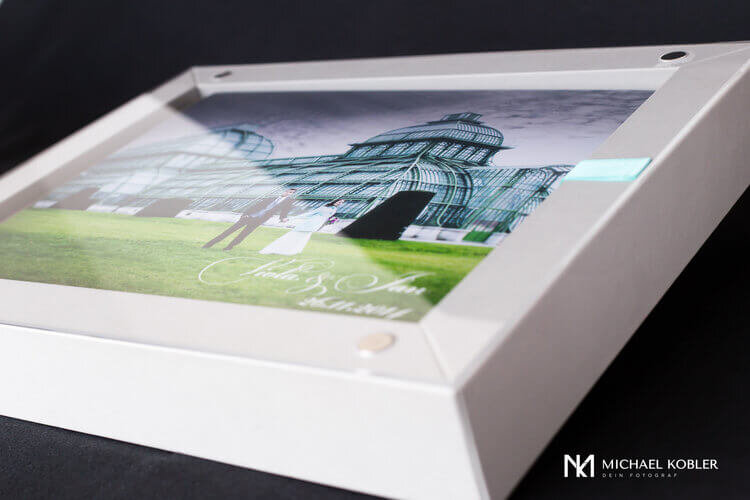
Milano series in storage box with acrylic glass cover.
In this article, you will see how your picture story is created. No technology, no software, no technical terms. It's all about selection, editing, sequence, rhythm, and your influence on the final structure.
1) Are you going to get a wedding album, or are you leaving it open?
You decide for yourselves whether you want a wedding album.
directly when booking, you plan the album from the outset with
Later, when you have seen your pictures and realize you want your story as a book
Both are fine. You don't have to decide early on if you don't have a feel for your photos yet.
2) Your fixed milestone after the wedding: photos within 14 days at the latest
You will receive your finished photos no later than 14 days after the wedding. If you want an album, you will also receive a first album draft at the same time. This immediately takes you from "lots of photos" to "this is our story as a book."
3) The selection, so that you don't have to scroll through repetitions later
For you, this selection means you get the most powerful moments, without duplication or unnecessary variations. Later, you won't be flipping through five similar images, but rather through a story with clear dramatic structure.
Three things are important when making your selection:
Key moments that make your day special: arrival, wedding ceremony, congratulations, speeches, first dance, party
Connection, glances, hands, small gestures, reactions
Transitions to keep the story flowing, paths, changes of location, mood between the highlights
Typically, similar scenes are reduced:
several almost identical laughs, hugs, clinking glasses
too many variations of group photos
Images that are acceptable on their own, but disrupt the flow of the album
Result: You get a selection that feels like your day, not like a bunch of data.
4) Editing, so that everything fits together and you recognize yourselves
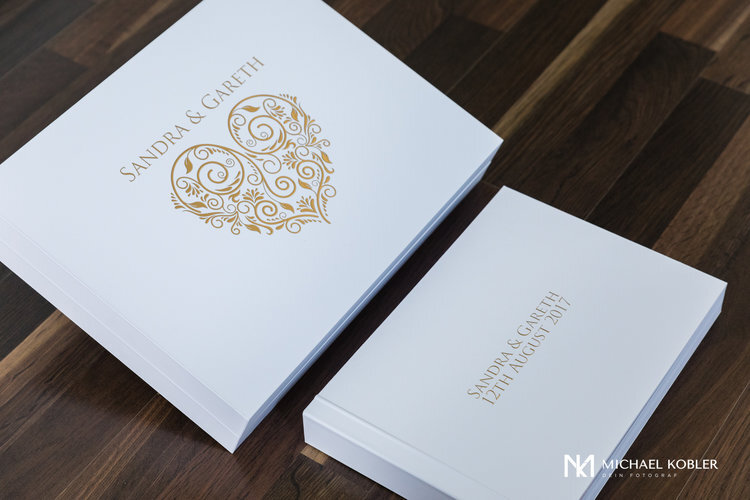
Finishes with custom patterns.
Your images should belong together. When clicking through, everything should feel coherent. That's why all photos are edited consistently, without any sudden changes in appearance.
What you get out of it:
natural skin tones, you look like yourselves
Light that shows you clearly without distorting the room
Colors that remain calm and also work well in album printing
If something in the picture is distracting, it gets tidied up. If it's part of your reality and doesn't bother you, it stays. The goal is an honest, clean look that will still feel familiar to you years later.
5) The album phase, where photos are turned into a narrative
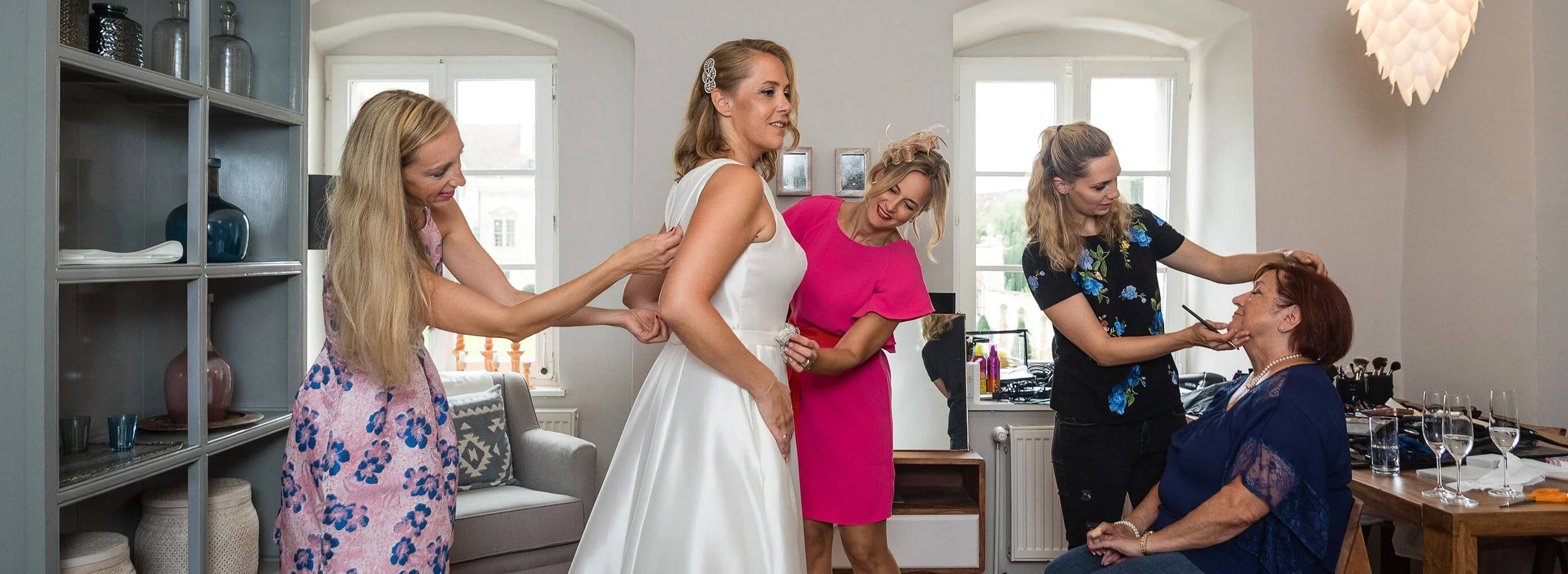
Getting ready—a double page in the wedding album
A wedding album works well when the order, pace, and pauses are right. It's not about fitting in as much as possible. It's about telling the story of your day in such a way that you are automatically transported back to it when you leaf through the pages.
That is why the structure is usually divided into chapters:
Arrival and atmosphere
Preparation, closeness, small interactions
Wedding ceremony, schedule plus reactions
Congratulations, encounters, hugs
Couple photos as a quiet block, so you have some breathing space
Dinner and speeches, closeness and audience
Party, energy, finale
This is followed by the rhythm, which often makes all the difference:
After a loud scene, you need a quieter side.
After many close-ups, you need space again.
Details function as pauses, not as filler material.
Series only work where there is a plot: entrance, ring, kiss, exit.
The result is an album that you will enjoy leafing through, because every page has a meaning.
6) The first album draft—you're not starting from scratch
You will receive a complete first version of your album. This version will show a clear recommendation for your image sequence, i.e., how your story can work as a book.
Important: This is not final.
You can do anything with the design:
Swap pages
Replace images
Shorten or expand chapters
completely discard the draft and start over
The advantage for you is simple. You don't start with a blank slate. You already see your story as an album. This makes it easier for you to make decisions because you are responding to something concrete.
7) Joint finalization, you set the direction
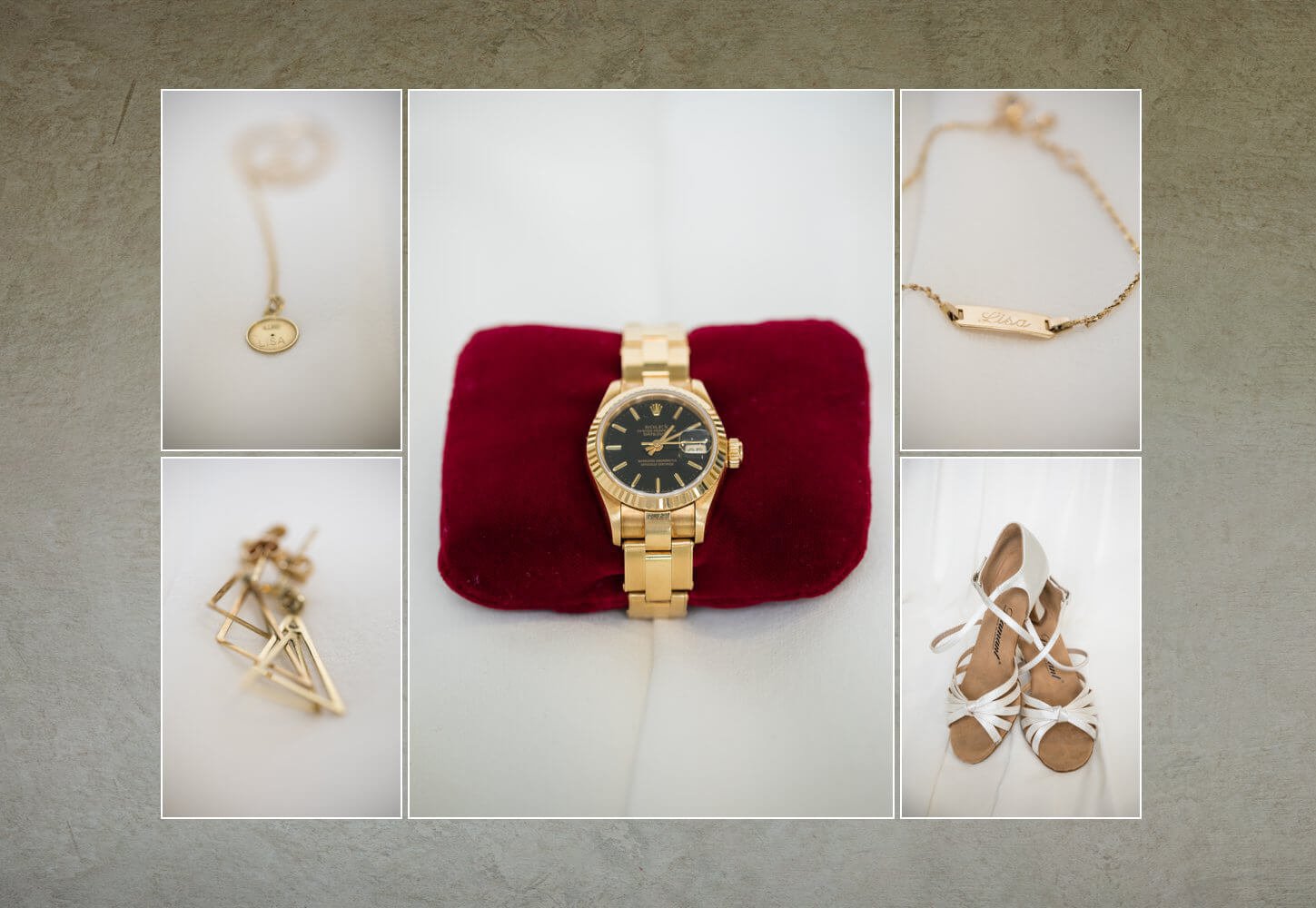
Bridal details in the wedding album
You set the tone from the very first draft. You tell us what's important to you. We then adjust the order until, when you leaf through the pages, you say: Yes, that's exactly how our day was.
Typical requests that can then be easily implemented:
More focus on family, less on decoration
More space for parties and a great atmosphere
longer ceremony part, because there was a lot of emotion there
Fewer couple photos, but the strongest motifs
certain people fixed in the album, others more compact
It's always about the sequence of images. In other words, your flow in the book. That's exactly where individualization comes in.
8) Materials, cover, paper, your own topic—this is about content and order.
At the same time, there are decisions to be made about materials, colors, embossing or lettering, endpapers, and paper types. You can also customize these. However, this article deliberately focuses only on the content and image sequence—in other words, your story in the album.
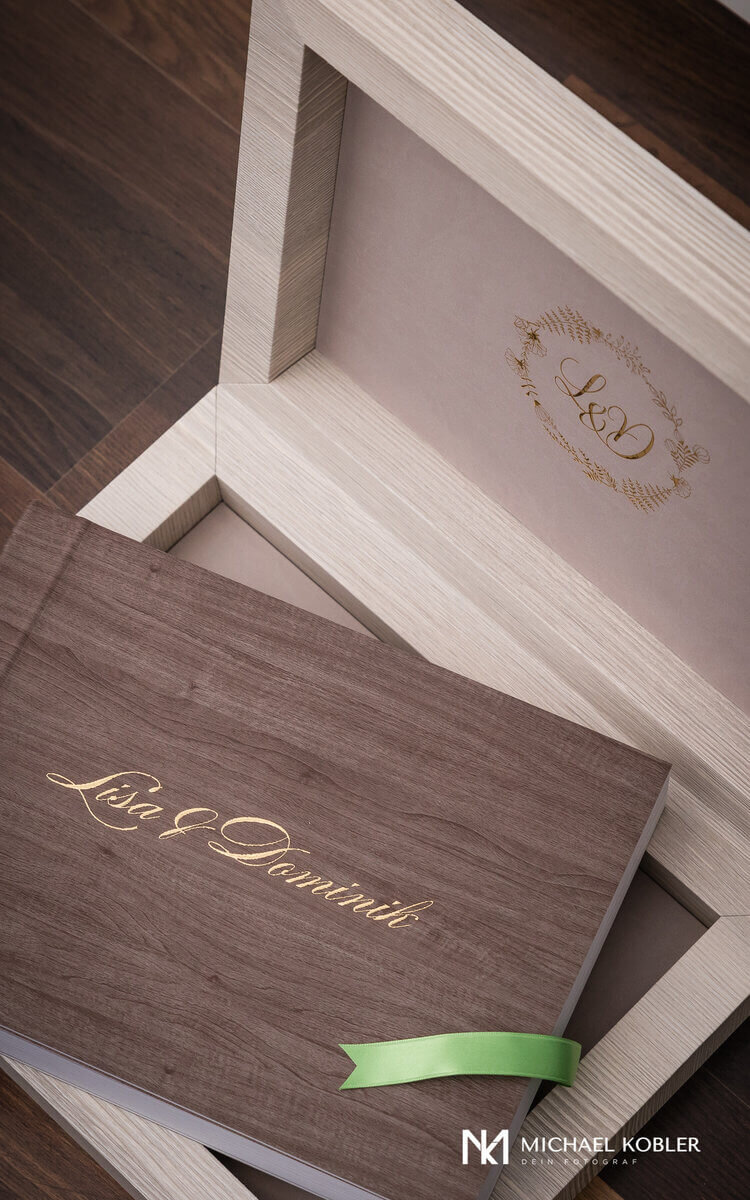
Wedding album - memories across generations.
9) If you decide on an album later
If you don't know yet whether you want an album, that's okay.
Keep two things in mind:
You will receive your finished photos no later than 14 days after the wedding.
If you want an album, you will also receive a first draft of the album at this stage so that you don't have to start from scratch.
In summary
Perhaps the most important point in the entire article is this one. A wedding album is not created by "as many photos as possible," but by a clear sequence of images that tells the story of your day as it felt. First, you get a strong foundation. Then you give feedback, and we work together on the order, pace, and selection until everything fits perfectly. If you don't have to think when you flip through the pages, but are simply immersed in the story, then the story is right.
If you want, you can give me two pieces of information before the wedding. This will make the album story even more focused.
Which three moments should be given the most space in the album?
Which people should definitely be included in the album?
Yours, Michael
